Endangered Animals in Africa:
Which Species Are at Risk and Why
Every gift through Empowers Africa goes directly to vetted organizations protecting Africa’s wildlife on the ground, and is tax-deductible for U.S. donors.
Key Takeaways:
- More than 11,700 species in sub-Saharan Africa are threatened with extinction, including elephants, rhinos, lions, cheetahs, pangolins, gorillas, wild dogs and vultures.
- Habitat loss, human-wildlife conflict, poaching for international markets, snaring for bushmeat and climate change drive most of these declines, and the pressures are closely connected.
- Anti-poaching patrols, wildlife corridors, translocations and community-based conservation are the tools protecting these species today, and the most lasting work benefits the people who live alongside wildlife as well as the animals themselves.
- Recovery is possible: mountain gorillas and southern Africa’s Cape Vulture have both improved in status thanks to sustained protection.
- Empowers Africa funds this work directly, granting more than $27 million since 2013 to over 70 organizations across 16 countries.
Africa is home to some of the most recognizable wildlife on the planet, and to some of the steepest population declines. Understanding why a species becomes endangered, and what it takes to reverse that decline, means looking past the headlines to the pressures each animal faces on the ground, and to the people who live alongside them. This guide covers the species most at risk, the reasons behind their decline and the conservation work underway to protect them, much of it led by the African organizations Empowers Africa supports.
What Does It Mean for a Species to Be Endangered?
“Endangered” is often used loosely to mean any animal at risk, but in conservation it has a precise meaning. The International Union for Conservation of Nature (IUCN) Red List, the world’s most widely used measure of extinction risk, sorts species into categories based on population size, rate of decline, range and the threats they face.
Understanding the IUCN Red List Categories
- Extinct (EX): No individuals remain anywhere.
- Extinct in the Wild (EW): Survives only in captivity or outside its natural range.
- Critically Endangered (CR): Faces an extremely high risk of extinction in the wild.
- Endangered (EN): Faces a very high risk of extinction in the wild.
- Vulnerable (VU): Faces a high risk of extinction in the wild.
- Near Threatened (NT): Close to qualifying as threatened, or likely to qualify soon.
- Least Concern (LC): Widespread and abundant, with no immediate risk.
- Data Deficient (DD): Not enough information to assess its risk.
- Not Evaluated (NE): Not yet assessed.
Species in the three middle categories, Critically Endangered, Endangered and Vulnerable, are grouped together as “threatened.” According to the IUCN Red List, more than 11,700 species in sub-Saharan Africa now fall into these categories, out of nearly 49,500 threatened species worldwide. South Africa alone has 1,115 threatened species, and Kenya has 827. In South Africa, Lesotho and Eswatini, the 2025 Red List of mammals compiled by the Endangered Wildlife Trust and the South African National Biodiversity Institute found that one in five mammals is threatened, rising to 42% of mammals found nowhere else.
Vulnerable vs Endangered vs Critically Endangered
The difference comes down mainly to how fast a species is declining. Under the IUCN’s criteria, a fall of at least 30% over ten years or three generations can qualify a species as Vulnerable, at least 50% as Endangered and at least 80% as Critically Endangered. These categories are not fixed. Species can move up or down as their numbers change. In the 2025 Southern African mammal assessment, 11 species moved to a higher threat category, while three improved, including Hartmann’s mountain zebra, which moved from Vulnerable to Near Threatened after its population grew. Status can also differ within a species: as later sections show, Africa’s two elephant species and its gorilla subspecies sit in different categories, which is why conservation has to be tailored to each population rather than applied broadly.
Why Are So Many African Species at Risk?
From a safari vehicle, Africa’s wildlife can look untouched. From a village on the edge of a reserve, the picture is very different. Here, elephants cross farmland at night, lions move through cattle country and the same rivers that water the herds water the crops. As farms and towns spread, Africa’s wildlife is squeezed from every side: by shrinking land, by conflict with the people who share it, by poachers supplying markets far beyond the continent, and by droughts that are growing longer and harsher. No single threat explains the decline. It is the way they compound one another that pushes species toward the edge.
Habitat Loss and Land Fragmentation
Africa’s population is the fastest-growing in the world, and as farms, towns and roads spread, the open land wildlife depends on is being reduced. Many of Africa’s large animals need room to roam, but they are increasingly confined to national parks and reserves that are too small and too far apart. Isolated populations compete for limited food and water and can no longer mix with other groups, which weakens their genetic diversity over time. That is why conservationists work to keep wildlife corridors open: strips of open land that let animals move safely between protected areas. Where corridors are no longer possible, conservationists move animals between reserves themselves, so that small, fenced populations stay genetically healthy. It is work explored in more detail in the lion and cheetah sections below.
Empowers Africa partners are also winning land back. In South Africa’s Great Karoo, Friends of Samara Trust has rewilded around 67,000 acres of former livestock farms and is working to link three national parks into one of the country’s largest protected areas.
Human-Wildlife Conflict
For many rural families, wildlife is not something seen on safari. It is a neighbor that can be dangerous and costly. Elephants raid crops, and lions and wild dogs prey on livestock that families depend on for food and income. More than half of Africa’s remaining wild lions live outside protected areas, on land shared with people and livestock, so these encounters are becoming harder to avoid.
The most effective long-term solutions work directly with the communities living alongside wildlife, helping them prevent losses before they happen. Empowers Africa partners lead this work:
- Lion Landscapes sends herders real-time lion movement data in Kenya, Tanzania and Zambia, so they can keep their animals out of harm’s way.
- Wilderness Trust’s Lion Alert system warns communities in Botswana when a lion is nearby.
- Ecoexist helps Botswana’s farmers protect their fields from elephants through elephant-aware farming and deterrents.
- Tsavo Trust’s 33-kilometer fence has cut human-elephant conflict by 82% in Kenya.
Poaching and the Illegal Wildlife Trade
Poaching remains one of the most direct threats to African wildlife, and it takes two very different forms.
The first is driven by demand for ivory, rhino horn and pangolin scales, most of it from markets outside Africa. Organized criminal networks, mostly linked to Southeast Asia, partner with local operators to smuggle these products, driven by beliefs about medicinal value and their appeal as luxury goods. Sustained protection works: in Kenya’s Tsavo, elephant and bushmeat poaching fell by at least 70% between 2013 and 2021, thanks to aerial surveillance and joint ranger patrols supported by Tsavo Trust.
The second is poaching for bushmeat, the wild meat hunted for food and sold locally. Most of it is done with snares: simple loops of wire or cable, often cut from fencing and set along the paths animals use. For rural families, bushmeat can be an affordable source of food and income, but much of it now feeds a commercial trade, and the scale is staggering. Across the 23 protected areas it manages, African Parks’ rangers removed 34,883 snares in a single year. In Kruger National Park, around 14,000 snares were removed in just three years, between 2020 and 2022, and official figures only count the snares and carcasses that are actually found. The problem extends well beyond the park’s boundaries, onto the private reserves and game farms of the Greater Kruger, where anti-poaching teams and volunteers sweep for snares week after week.
The problem is that snares do not discriminate. A snare set for an antelope will just as easily catch a buffalo, a lion or a young elephant, leaving it maimed or dead. In 2023 alone, at least 415 animals in Kruger were known to have been killed by snares, according to figures shared at South Africa’s first national Snare Mitigation Symposium, co-hosted by Empowers Africa partner Cape Leopard Trust with SANParks and the Endangered Wildlife Trust.
Empowers Africa partners remove snares at scale: Tsavo Trust’s teams have cleared 11,530 since 2013, and the Kevin Richardson Foundation has removed around 16,200.
Climate Change and Drought
Africa produces only about 4% of the world’s greenhouse gas emissions, yet nine of the ten countries most vulnerable to climate change are in sub-Saharan Africa. Between late 2020 and 2023, the Horn of Africa, the easternmost tip of the continent, endured five failed rainy seasons in a row, the region’s longest drought in 40 years, with Kenya, Ethiopia and Somalia hit hardest. In Kenya alone, the Kenya Wildlife Service recorded the deaths of 205 elephants, 381 zebras and 49 endangered Grevy’s zebras in just nine months of 2022. Tsavo, home to most of the world’s remaining Super Tuskers, was among the hardest-hit areas.
Southern Africa has faced the same pressure. During the 2023–24 El Niño drought, more than 100 elephants died in Zimbabwe, many around Hwange National Park. There, Empowers Africa partner Friends of Hwange Trust uses boreholes and solar-powered pumps to keep the park’s waterholes running through the dry season. As droughts grow longer and more frequent, they compound every other threat wildlife faces.
African Elephants: Population Decline and the Ivory Trade
Elephants shape the landscapes they live in, opening up woodland, digging for water in dry riverbeds and spreading seeds across vast distances. Their decline affects far more than elephants alone. Across Africa, they face the same pressures as many of the species in this guide, driven above all by the ivory trade and the loss of the space they need to roam.

Savanna Elephants vs Forest Elephants
Africa has two species of elephant. The African Savanna Elephant ranges across the grasslands and woodlands of eastern and southern Africa and was listed as Endangered by the IUCN in 2021, after numbers fell by more than 60% over 50 years. The smaller African Forest Elephant lives in the rainforests of West and Central Africa, with its largest strongholds in Gabon and the Republic of Congo, and was listed as Critically Endangered the same year after a decline of more than 86% over 31 years. Together, around 415,000 elephants remain across the continent.
The elephant partners Empowers Africa supports work with savanna elephants, from Tsavo Trust in Kenya to Ecoexist in Botswana and Friends of Hwange Trust in Zimbabwe, which help farmers and elephants share the same land.
How Poaching for Ivory Continues to Threaten Elephants
Despite international bans on the ivory trade, demand persists, and elephants are still killed for their tusks. The animals most at risk carry the biggest ivory. Known as Super Tuskers, or Big Tuskers, these elephants carry a rare genetic trait that produces tusks so large they scrape the ground, each weighing more than 50 kilograms, which makes them a prime target for poachers.
Only around 25 remain in the world, most of them in Kenya’s Tsavo Conservation Area, which may hold the last viable gene pool of elephants with exceptionally large ivory. With so few left, the loss of even one individual weakens the chances of the trait surviving.
Protection is making a difference. Working with the Kenya Wildlife Service, Tsavo Trust helped reduce elephant and bushmeat poaching in Tsavo by at least 70% between 2013 and 2021, through aerial surveillance, ground patrols and the recovery of thousands of snares.
Anti-Poaching Efforts and Elephant Collaring
Protecting elephants depends on knowing where they are. GPS collars let conservation teams track elephant movements, understand how herds behave and respond quickly when animals stray toward danger, whether that is a poacher or a farmer’s field. In northern Botswana, Ecoexist uses satellite collars to follow elephant movements and plan safe routes between people and wildlife.
Empowers Africa has been part of this work on the ground. In June 2018, the Empowers Africa team helped collar two elephant bulls at Somkhanda, a community-owned reserve in KwaZulu-Natal, alongside Wildlands, Wildlife ACT and wildlife veterinarian Dr. Mike Toft.
In Kenya, Empowers Africa co-produced Emergence, a documentary with Off Piste Africa directed by Malcolm Randles. The film follows Tsavo Trust’s Big Tusker Project and its work to protect the world’s remaining Super Tuskers from poaching, habitat loss and conflict with people.
Rhinos: The Fight Against Extinction
Few animals show both the best and worst of conservation as clearly as Africa’s rhinos. The southern white rhino was once reduced to as few as 20 to 50 animals in South Africa at the end of the 19th century, and was brought back through decades of protection. Yet a surge in poaching for their horns has put both of Africa’s rhino species, the black and the white, back under constant threat. Their story shows how quickly hard-won gains can be lost, and what it takes to protect them.
Black Rhino vs White Rhino Populations
Both black and white rhino populations in Africa remain under constant threat from poaching, though their population sizes and historical ranges differ. Conservancies such as Kenya’s Ol Pejeta now serve as critical strongholds, home to more than 165 Critically Endangered eastern black rhinos and 44 southern white rhinos. It is the largest black rhino sanctuary in East and Central Africa, and its black rhino population has grown from just 20 in 1993.
Ol Pejeta is also home to the last two northern white rhinos on Earth, a stark reminder of what can be lost when protection comes too late.
Why Rhino Horn Demand Persists
Rhino horn is made entirely of keratin, the same protein found in human hair and fingernails, and has no proven medicinal value. Yet demand has proved remarkably stubborn. According to the United Nations Office on Drugs and Crime, demand is driven by the belief that rhino horn has medicinal value and by its status as a luxury symbol, and organized networks linked to Southeast Asia work with local operators to move horn out of Africa.
That demand is felt directly on the ground in Africa. South Africa, home to most of the world’s rhinos, lost 352 rhinos to poaching in 2025. That is 16% fewer than the year before, but pressure is shifting rather than disappearing: losses in Kruger National Park doubled to 175, almost half the national total.
At the other end of the chain are the people who do the killing. Many come from communities on the edges of parks where poverty runs deep: around Kruger National Park, unemployment exceeds 45%. Those who take the greatest risks receive only a small share of what the horn eventually sells for, but for someone struggling to feed a family, even that can be hard to refuse.
Dehorning, Anti-Poaching Patrols, and Rhino Sanctuaries
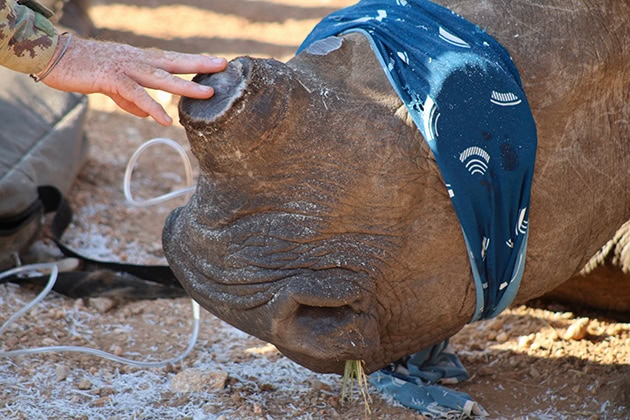
Dehorning means removing most of a rhino’s horn so it is no longer worth killing for. Under sedation, a vet removes the horn with a chainsaw in a procedure that is painless for the animal and takes around 30 minutes, much like trimming a fingernail. Because the horn grows back, it has to be repeated every one to two years. Empowers Africa has documented the process firsthand: its film Dehorning a Rhino in the Wild was featured in National Geographic’s Short Film Showcase and won Best Documentary Short at the 2017 London Independent Film Awards.
The results are clear in the Greater Kruger. In 2017, Balule Nature Reserve lost 17 rhinos to poachers in a single year. After dehorning all of its rhinos alongside neighboring Klaserie and strengthening its anti-poaching unit, Balule went two full years without losing a single rhino. Empowers Africa partner Balule Community and Anti-Poaching Trust raises funds for this work. Nearby, at The Royal Portfolio’s Royal Malewane, dehorning is an ongoing project that guests can support.
Dehorning works best alongside active protection. In Kenya, Empowers Africa partner Tsavo Trust supports the Kenya Wildlife Service in protecting Kenya’s largest indigenous black rhino population, rhinos native to Tsavo rather than moved in from elsewhere, with more than 160 animals in and around the Ngulia Rhino Sanctuary.
When poachers do strike, they often leave orphaned calves behind. Singita Lowveld Trust has committed to a multi-year sponsorship with Care for Wild, the world’s largest orphan rhino sanctuary, to cover the full rehabilitation of these animals.
Help protect Africa’s rhinos and the people working to save them.
Rangers, dehorning teams and rhino sanctuaries all depend on steady support.
African Lions: A Species Under Pressure
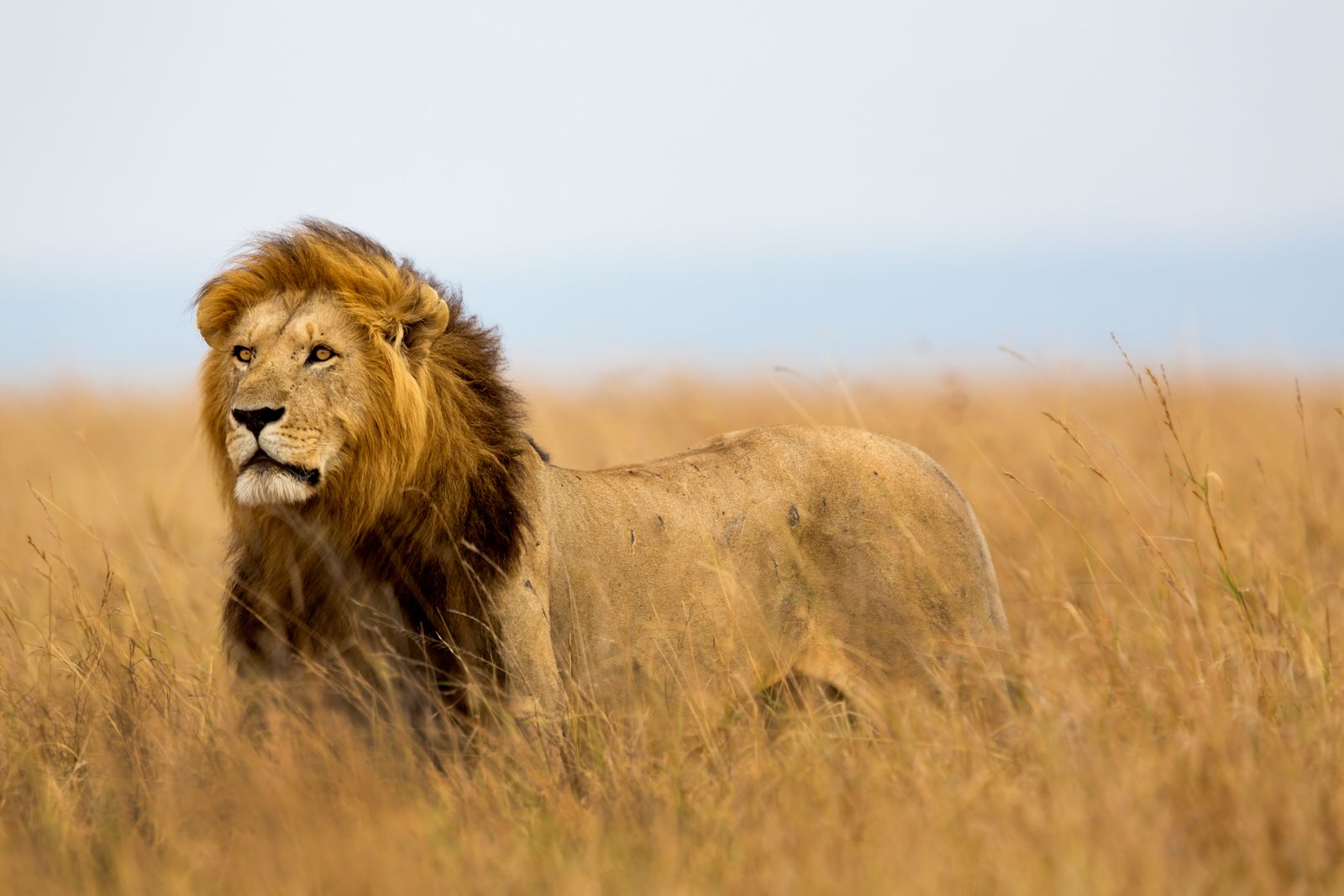
The lion is Africa’s most iconic animal, yet many people are surprised to learn how much trouble it is in. There are now fewer wild lions left in Africa than rhinos, and the species has vanished from most of the places it once roamed. Lions face a combination of shrinking habitat, conflict with livestock farmers, and declining prey, pressures that are growing as people and lions increasingly share the same land.

How Much of the Lion Population Has Been Lost
Over the past 80 years, Africa’s wild lion population has fallen from an estimated 450,000 to between 18,000 and 23,000 according to the Kevin Richardson Foundation. Lions have lost more than 90% of their historic range and have disappeared entirely from 26 countries where they once lived. Many of the populations that remain are small and cut off from one another, making them more vulnerable to disease, inbreeding and local extinction.
South Africa tells a more complicated story. The country holds an estimated 3,490 wild lions, while around 8,500 more live in captivity, many raised for cub petting and canned hunting. Partners such as the Kevin Richardson Foundation and Panthera Africa provide lifelong sanctuary for lions rescued from this industry.
Habitat Loss and Human-Wildlife Conflict
As farms and settlements spread into lion country, lions and livestock increasingly share the same land. For a herder, losing cattle to a lion can mean losing a family’s savings, and retaliatory killings often follow. Protecting individual lions is not enough on its own; lasting solutions have to make living alongside lions work for the people who do it.
Empowers Africa partners are finding ways to make lions worth more alive. Lion Landscapes has developed “Lion Friendly Beef” in Kenya, creating markets for cattle raised by herders who coexist with lions, and a “Lion Carbon” program in Zambia that links wildlife protection to carbon income. In Botswana, Wilderness Trust’s Wildlife Friendly Beef initiative uses mobile enclosures and managed grazing to keep cattle healthy and separated from wildlife. In Kenya’s Greater Mara, Kenya Wildlife Trust’s Mara Predator Conservation Programme uses GPS collars to monitor lions and works with communities to reduce conflict and promote coexistence.
Lion Translocation and Habitat Expansion Projects
Translocation means carefully moving lions from one reserve to another. It has become an important tool for rebuilding lion populations, bringing lions back to areas where they once lived and keeping small, fenced populations genetically healthy.
Empowers Africa has been part of this work firsthand. In 2017, alongside Wildlands and Wildlife ACT, Empowers Africa helped move three lions from Phinda Private Game Reserve to Somkhanda Community Game Reserve in KwaZulu-Natal. On this community-owned reserve, the pride now roams around 30,000 acres, bringing lions back to land managed by the local community. The move was captured in the Empowers Africa film Lion Pride Translocation.
Other partners are expanding lion habitat itself. In the Great Karoo, Friends of Samara Trust welcomed back the region’s first lions in more than a century as part of its work to rewild former farmland. The Kevin Richardson Foundation buys land to expand natural lion habitat, with the long-term aim of reversing the decline of Africa’s lions.
Cheetahs: Africa’s Vulnerable Big Cat
The cheetah is the fastest land animal on Earth, but speed has not protected it. Cheetahs need vast open spaces to hunt, and as Africa’s wild land has been fenced, farmed and divided, they have lost much of the room they need to survive. Today the species depends heavily on carefully managed populations and on the people working to connect them.
How Many Cheetahs Are Left in the Wild
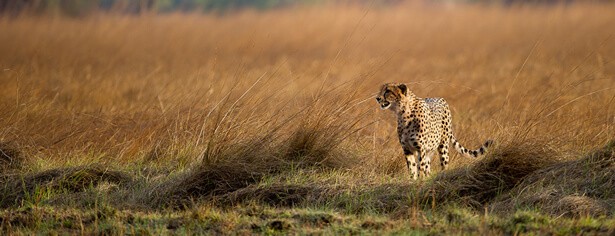
Only about 6,500 mature cheetahs remain worldwide, according to the Endangered Wildlife Trust, with most remaining populations in eastern and southern Africa. The species is listed as Vulnerable on the IUCN Red List.
Southern Africa is one of the cheetah’s most important strongholds, with wild populations across Namibia, Botswana, Zimbabwe, Zambia, Mozambique and South Africa.
In South Africa, around 116 adults live in Kruger National Park and around 80 in the South African section of the Kgalagadi Transfrontier Park, while roughly 196 roam free on farmland and other unprotected land. The rest belong to a managed network of fenced reserves known as the metapopulation, stretching from the Lowveld to the Great Karoo, which by December 2025 held around 540 cheetahs across 70 reserves, including about 298 adults.
Genetic Diversity and Habitat Loss
Cheetahs naturally have low genetic diversity, which leaves them more vulnerable to disease and less able to adapt to change. When populations are confined to small, fenced reserves that are cut off from one another, that diversity shrinks even further.
South Africa’s answer has been to manage its fenced reserves as one connected population, moving cheetahs between them as they would once have moved naturally. Since 2012, more than 700 cheetah translocations have been coordinated, and the population has grown by an average of 8.8% a year. Empowers Africa partner Friends of Samara Trust is part of this effort. Since its first cheetah returned to the Great Karoo in 2003, Samara has been home to almost 50 cheetahs and works with the Endangered Wildlife Trust to move cheetahs to other reserves to keep the wider population genetically healthy.
The work now reaches beyond South Africa’s borders. The Metapopulation Initiative has used cheetahs from South Africa’s reserves to bring the species back to Mozambique, Malawi and Zambia. In 2025 alone, it moved 16 cheetahs to the Panyame Conservancy, a 210,000-hectare unfenced landscape along Mozambique’s Zambezi River, where cheetahs had been thought to be locally extinct.
Competition With Other Predators
Cheetahs are built for speed, not strength. Lighter and less powerful than Africa’s other big predators, they often lose their kills, and their cubs are easy prey. This limits where cheetahs can safely establish territory, even inside Africa’s biggest parks. Kruger National Park covers nearly 20,000 square kilometers, yet it holds only around 116 adult cheetahs, far fewer than its size might suggest.
Carefully managed reserves offer cheetahs a better chance. By moving cheetahs between reserves and giving them room to hunt and raise cubs, conservationists can help them thrive in places where they would otherwise be pushed out. Empowers Africa partner Friends of Samara Trust is one of the most successful cheetah reserves in South Africa.
Pangolins: The Most Trafficked Mammal on Earth
Africa is home to four of the world’s eight pangolin species, and all four are threatened with extinction:
- Giant pangolin: Endangered
- White-bellied pangolin: Endangered
- Temminck’s ground pangolin: Vulnerable (only pangolin found in South Africa)
- Black-bellied pangolin: Vulnerable
In the IUCN’s 2019 Red List update, three of the four were moved to higher threat categories as trafficking pressure grew.

Why Pangolins Are Poached
Pangolins are hunted for their scales and their meat. Scales are sold into traditional medicine markets, mostly in Asia, even though, like rhino horn, they have no proven medicinal value. In West and Central Africa, pangolins are also eaten as bushmeat, and in southern Africa their parts are used in traditional medicine.
Between 2016 and 2024, more than 530,000 pangolins were linked to 2,222 illegal trade seizures worldwide, according to a report prepared for CITES by the IUCN Pangolin Specialist Group. Scales made up 99% of all confiscated pangolin parts. Most were trafficked from Nigeria, Mozambique, Cameroon and the Congo to markets in China and Viet Nam.
Poaching is not their only threat. In South Africa, electric fences are the biggest known danger to Temminck’s ground pangolin. Pangolins caught on the wires are often badly injured or killed, and the South African National Biodiversity Institute estimates that between 377 and 1,028 die on electric fences every year.
Rescue, Rehabilitation, and Anti-Trafficking Efforts
For anyone lucky enough to see one, a pangolin is unforgettable. Temminck’s ground pangolin walks upright on its hind legs, its front feet and tail held off the ground, and spends its nights quietly searching for the few species of ants and termites it eats. It is solitary and mostly nocturnal, sheltering by day in old aardvark burrows, and a mother raises a single pup that rides on her tail. In the Kalahari, an adult pangolin’s home range averages around 6.5 square kilometers, about 2.5 square miles, so they cover a fair amount of ground.
That wandering brings them into contact with people. Pangolins are sometimes spotted crossing dirt roads in the bush or turning up near homes and farms on the edge of reserves. Every sighting is valuable: members of the public can report pangolin sightings to the African Pangolin Working Group, helping researchers understand where pangolins live and making it easier to get help to an animal in trouble.
Not every encounter ends well. In South Africa, rescued pangolins usually come from one of two places. Many are recovered from traffickers in police sting operations, supported by groups like Scales Conservation Fund, and others are found caught on the low wires of electric fences. In July 2025, police and anti-poaching units arrested two suspects in Musina and recovered a female pangolin smuggled in from Zimbabwe. She was in very bad condition, and Umoya Khulula Wildlife Centre arranged an emergency flight with The Bateleurs to get her to vets in Hoedspruit in time.
Once a pangolin reaches a vet, every hour counts. At Hoedspruit Animal Hospital (formerly Provet), vets X-ray rescued pangolins for internal injuries, run blood tests, put them on a drip for dehydration and tube-feed them to build up their strength. Females are also given an ultrasound to check whether they are pregnant. The weakest stay in ICU until they’re strong enough to move on to rehabilitation.
Rehabilitation can take anywhere from a few weeks to a year. Pangolins at Umoya Khulula are kept at a secure, undisclosed location for their protection, and are taken on daily feeding walks so they can forage for ants and termites as they would in the wild. When they’re ready, they’re released into a safe wild area with a tracker fitted. Monitors find them regularly to check their health and weigh them, until the team is confident each pangolin has settled into its new home
Empowers Africa partner the Tswalu Foundation is helping make these releases count. In 2026, Tswalu Kalahari Reserve became an official release site for pangolins confiscated from poachers in South Africa’s Northern Cape, where a new study with the University of the Witwatersrand is tracking how rescued pangolins settle back into the wild. In Uganda, Volcanoes Safaris Partnership Trust is launching the first-ever pangolin census around Kyambura Gorge after a camera trap captured a Giant Pangolin there in March 2024.
Behind every rescue is a wider fight against the trade itself. Between 2016 and 2024, South African police ran 276 operations against pangolin trafficking, arresting 679 suspects and recovering 302 pangolins, most of them still alive. Nearly 40% of those pangolins were recovered in Limpopo, the province that is home to Hoedspruit and much of the rescue work described above.
Gorillas and Other Great Apes at Risk
Gorillas and chimpanzees live in close-knit family groups in the forests of Central and East Africa, and their survival is tied directly to the health of those forests and the communities around them. All of Africa’s great apes are threatened, yet the story is not only one of loss. In Uganda’s Bwindi Impenetrable National Park, the first-ever chimpanzee census confirmed 426 chimpanzees in 2026, alongside the park’s famous mountain gorillas, a reminder that well-protected forests can still hold thriving ape populations.

Mountain Gorillas vs Western Lowland Gorillas
Africa’s gorillas live in two very different worlds, and they face very different futures.
Mountain gorillas live in just two places: the forested volcanoes of the Virunga Massif, which straddle Rwanda, Uganda and the Democratic Republic of the Congo, and Uganda’s Bwindi Impenetrable National Park. They are one of conservation’s rare success stories. Thanks to decades of protection, veterinary care and gorilla tourism that funds both parks and local communities, their numbers have grown to an estimated 1,063, and in 2018 the IUCN moved them from Critically Endangered to Endangered.
Western lowland gorillas are far more numerous but in much greater trouble. Around 362,000 live in the lowland rainforests of Central Africa, mostly in the Republic of the Congo and Gabon, with smaller numbers in Cameroon, the Central African Republic, Equatorial Guinea and Angola. Yet they are listed as Critically Endangered because their numbers are falling by about 2.7% every year. Only 23% live inside protected areas, leaving most exposed to hunting for bushmeat, and Ebola has killed up to 95% of gorillas in some of the areas it has struck.
The contrast is striking: a small, closely protected population that is growing, and a large, widely scattered one that is quietly declining.
Forest Degradation and Political Instability
For mountain gorillas, the main limit today is space. The national parks they live in are small islands of forest surrounded by some of Africa’s most densely farmed land, leaving little room for a growing population. Restoring forest at the edges of these parks is one of the most direct ways to help. Next to Rwanda’s Volcanoes National Park, Empowers Africa partner Wilderness Trust has planted more than 85,000 native trees to expand gorilla habitat, while in nearby Gishwati Forest, restoration has helped chimpanzee numbers grow from 13 to more than 30. In Uganda, Volcanoes Safaris Partnership Trust has spent over $700,000 buying land to create a protective buffer around Kyambura Gorge, home to an isolated community of chimpanzees.
In Central Africa, the pressures on forests are different. Logging roads open up remote forest to hunters, and the conversion of forest to oil palm plantations is an emerging threat to western lowland gorillas.
Conflict adds another layer of risk. In eastern Democratic Republic of the Congo, armed groups have attacked ranger posts. In early 2025, eight rangers were killed, gorilla trekking came to a standstill and regular gorilla monitoring stopped in parts of the region. When rangers cannot patrol and tourism income dries up, the protection that has allowed gorillas to recover is put at risk.
Cross-Border Conservation Efforts
Mountain gorillas do not recognize national borders. The Virunga Massif, one of only two places they live, stretches across Rwanda, Uganda and the Democratic Republic of the Congo, and gorilla families move freely between the three. Protecting them depends on these countries working together, from shared ranger patrols to joint population counts. The current mountain gorilla census in Bwindi and the neighboring Sarambwe Reserve, for example, is being carried out under the Greater Virunga Transboundary Collaboration, with 11 institutions taking part.
Tourism is a vital part of this cooperation, funding both park protection and the communities on their borders. Empowers Africa partner Volcanoes Safaris Partnership Trust works in both Uganda and Rwanda, building on more than 25 years of gorilla and chimpanzee tourism. Its plans include a new Bwindi Gorilla Conservation Center, alongside community projects such as bringing solar power to families living near Virunga.
African Wild Dogs: A Declining Predator
African wild dogs, also known as painted wolves, are among Africa’s most efficient hunters and one of its most endangered carnivores. Each dog’s mottled coat is unique, and packs live in close-knit family groups that hunt, raise pups and care for injured members together. That same dependence on the pack makes them vulnerable: when threats strike, they often take out an entire family at once.

Why Wild Dog Populations Keep Shrinking
African wild dogs are listed as Endangered on the IUCN Red List. Fewer than 6,600 remain across Africa, of which fewer than 1,400 are mature adults, and the species has lost more than 90% of its historical range. In South Africa, Kruger National Park holds the country’s largest population, around 350 wild dogs, according to the Endangered Wildlife Trust.
Wild dogs need more space than almost any other African predator. A single pack can roam across a vast area, and as land is fenced and farmed, packs increasingly come into contact with people. That brings several threats at once:
- Snares: wire snares set for bushmeat injure and kill wild dogs, and losing a pack’s alpha can cause the whole pack to break apart.
- Disease: rabies and canine distemper spread from domestic dogs can sweep through a pack quickly. In 2016, canine distemper killed all 13 members of a pack in Kruger National Park within 48 hours of being detected.
- Dispersal: young wild dogs that leave protected reserves to form new packs face all of these dangers on unprotected land.
- Conflict with farmers: wild dogs that prey on livestock or valuable game are sometimes shot or poisoned.
Because wild dogs live in tight-knit packs at naturally low numbers, losing even one pack is a serious setback for the species.
Conflict With Livestock Farmers
Wild dogs need huge areas to hunt, far more than most reserves can offer, so many packs range across private farmland. When dispersing wild dogs kill livestock, it costs farmers their income, and wild dogs that wander outside reserve fences face snares and conflict with people.
That’s why wild dog conservation depends on landowners as much as on rangers. Many farmers in South Africa already share their land with wild dogs, and where they are supported to do so, packs can survive well beyond protected areas.
Community Education and Monitoring Programs
Protecting wild dogs starts with knowing where they are. Packs move constantly and can cover vast distances, so conservation teams rely on careful monitoring to track their numbers, health and movements, and to step in quickly when a pack is in trouble.
Empowers Africa partners are part of this work across the Greater Kruger landscape. Singita Lowveld Trust supports the Endangered Wildlife Trust’s Carnivore Conservation Programme, which funds research and monitoring of wild dogs alongside lions, cheetahs and spotted hyenas. In the neighboring Balule Nature Reserve, the Balule Community and Anti-Poaching Trust runs a dedicated predator monitoring program that uses AI to identify individual animals from wildlife sightings, and carries out an annual predator census to track the reserve’s wild dogs and other carnivores.
Monitoring also reaches beyond reserve fences. After canine distemper wiped out a Kruger pack in 2016, wildlife vets pointed to vaccinating domestic dogs in communities around the park as the long-term solution, a reminder that protecting wild dogs depends on the health of the whole landscape, including the people and animals living around it.
When communities, landowners and conservationists work together, wild dogs can recover. In KwaZulu-Natal, the number of wild dog packs has increased significantly over the past two decades, supported by more than a million hectares of connected wild space. Empowers Africa has seen this work firsthand at Somkhanda, a community-owned reserve where Wildlife ACT and Wildlands help protect wildlife on land managed by the local community.
Birds of Prey and Vultures Under Threat
Africa is home to 11 vulture species, and seven of them are threatened with extinction, according to the IUCN Red List:
- Critically Endangered: White-backed Vulture, Rüppell’s Vulture, Hooded Vulture and White-headed Vulture
- Endangered: Lappet-faced Vulture and Egyptian Vulture
- Vulnerable: Cape Vulture
Several of Africa’s vultures have crashed within just a few generations. According to the IUCN Red List, the White-backed Vulture has declined by an estimated 81% over roughly 40 years, and Rüppell’s Vulture by around 92% over a similar period. There is some good news: the Cape Vulture, found only in southern Africa, improved from Endangered to Vulnerable in 2021, as breeding colonies in South Africa and Botswana have held steady or grown.

Why Vultures Matter to the Ecosystem
Vultures are Africa’s clean-up crew. Feeding in large groups, they can strip a carcass within hours, reducing the spread of disease among wildlife and livestock, and the risk of it passing to people.
Without vultures, carcasses can remain exposed for weeks, giving diseases such as anthrax, botulism and rabies time to build up and spread. For rural communities across Africa, who depend on the land for food, water and livestock, vultures provide a vital and largely unseen service.
Poisoning, Habitat Loss, and Declining Numbers
Poisoning is the single biggest threat to Africa’s vultures, and much of it is deliberate. Poachers have learned that vultures circling over a carcass can be seen from miles away, leading rangers straight to an illegal kill. To hide the evidence, they lace the carcasses of poached animals with poison. Because vultures feed in large groups, a single poisoned carcass can wipe out hundreds of birds at once. In 2019, 537 vultures were found dead in Botswana after feeding on three elephants that poachers had killed for their ivory and poisoned. Most were Critically Endangered White-backed Vultures.
Vultures are also killed for belief-based use. In parts of southern Africa, vulture parts are used in traditional medicine: brains are believed to give foresight, and hearts to increase intelligence. A study co-authored by the Endangered Wildlife Trust found that an estimated 400 to 800 vultures are used each year in Mpumalanga and Limpopo alone, most of them obtained through poisoning or trapping. Cape Vultures are the most sought after.
Vultures are also losing the land they depend on. For the Critically Endangered White-backed Vulture, the IUCN records a continuing decline in the area and quality of its habitat, driven by farming, housing, roads and logging. As savanna is cleared, vultures lose the tall trees they nest in and the wild herds whose carcasses they feed on. Power lines add to the toll, with vultures killed by electrocution and collisions.
Because vultures reproduce slowly, raising only one chick at a time, populations struggle to recover from these losses. Empowers Africa partner Kenya Bird of Prey Trust rescues and rehabilitates injured birds of prey at its centers at Lake Naivasha and Soysambu Conservancy, runs the Mara Raptor Project in the Maasai Mara, and works with communities to build understanding of these misunderstood birds.
How Conservation Organizations Are Responding
The organizations protecting Africa’s wildlife draw on a wide set of tools. Some are specific to a species, such as dehorning rhinos, rescuing trafficked pangolins and keeping elephant corridors open, all covered in the sections above. Three approaches, however, run through almost all of this work: well-trained anti-poaching and ranger units, the translocation of wildlife to safer and larger spaces, and community-based conservation that makes sure local people share in the benefits.
Anti-Poaching Units and Ranger Programs
Rangers are the front line of wildlife protection, and many of the partners Empowers Africa supports run their own specialized units, each adapted to its landscape:
- K9 units: Singita Lowveld Trust pairs its anti-poaching rangers with a K9 unit and new technology to counter organized crime syndicates in the Greater Kruger. The Royal Portfolio Foundation, a founder member of the Greater Kruger Environmental Protection Foundation, funds a specialized anti-poaching dog unit. In neighboring Balule, the Balule Community and Anti-Poaching Trust oversees ground-based units, aerial surveillance and K9 tracking teams.
- Aerial surveillance: In Kenya, Tsavo Trust combines aerial surveillance with joint ground teams alongside the Kenya Wildlife Service across more than 42,000 square kilometers.
- Round-the-clock rhino protection: In the Great Karoo, Friends of Samara Trust’s rangers protect black and white rhinos and elephants around the clock.
- Anti-poaching across borders: In Zimbabwe, Wilderness Trust supports the Scorpions Anti-Poaching Unit in Hwange National Park, while Friends of Hwange Trust uses fire management and road maintenance as anti-poaching tools.
- Community rangers: In Kenya’s Enarau Conservancy, rangers use EarthRanger technology to track wildlife and incidents in real time. Lion Landscapes trains Lion Rangers, Lion Defenders and Community Scouts, and AsiliaGiving supports ranger programs across Tanzania.
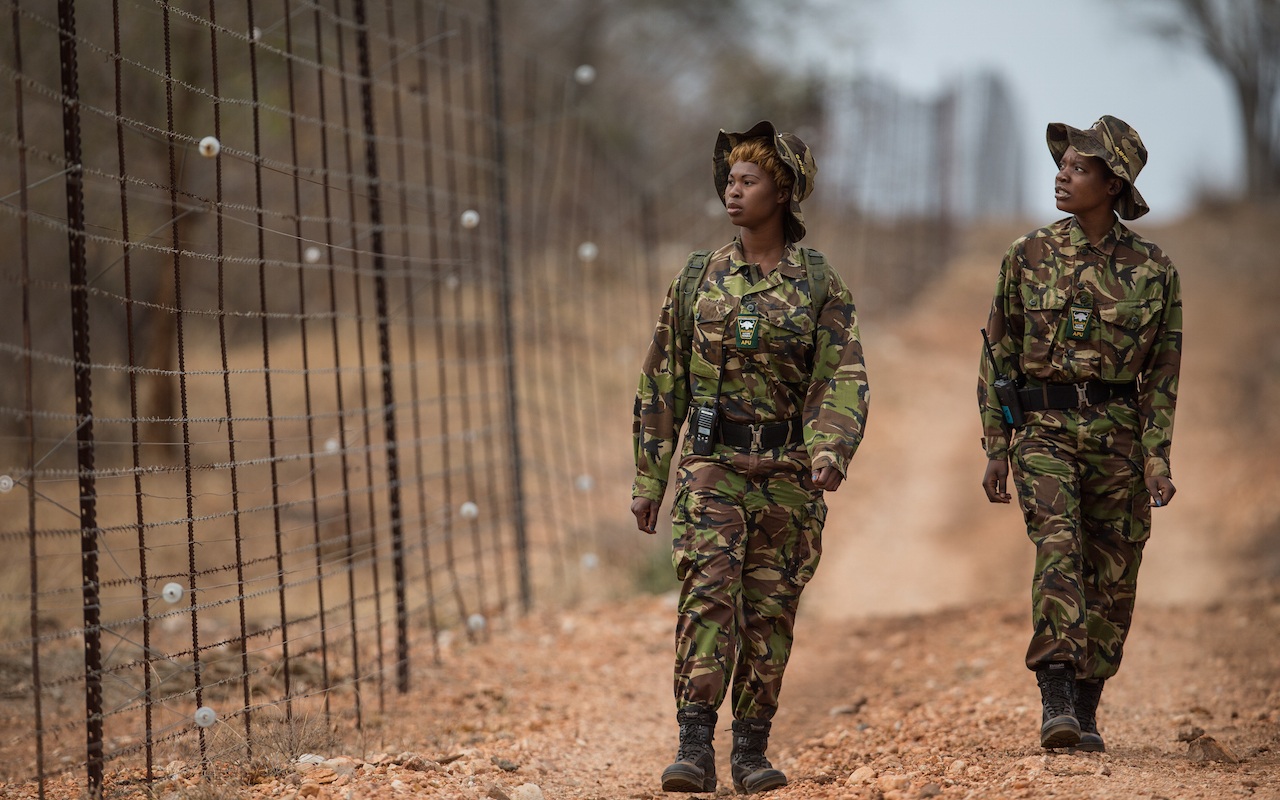
Some of the most effective units look very different from the armed patrols many people imagine. The Black Mamba Anti-Poaching Unit in Balule, made up mostly of women from local communities, patrols unarmed and relies on close relationships with neighboring villages for intelligence. The unit cut snaring and bushmeat poaching in its area by 75% and was named a UN Champion of the Earth in 2015. Empowers Africa’s documentary on the Black Mambas was selected for National Geographic’s Short Film Showcase.
Wildlife Translocation and Rewilding
Moving animals to new or expanded habitat has become a core strategy for rebuilding fragmented populations and bringing species back to places where they once thrived. Translocations are complex operations: animals are sedated, health-checked, moved by road or air and often held in a temporary enclosure, known as a boma, to settle in before release. But they can transform a landscape.
The approach works across species. In Botswana’s Tuli Block, Motse Community and Wildlife Conservancy raises funds for elephant translocation as part of its work to protect rhinos and restore habitat. In the Great Karoo, Friends of Samara Trust has rewilded former livestock farms into a reserve where cheetahs, elephants and lions have returned for the first time in more than a century. And as the species sections above show, the same approach is helping lions in KwaZulu-Natal, cheetahs across southern Africa and rescued pangolins in the Kalahari.
Community-Based Conservation Models
The most durable conservation work involves the communities living closest to wildlife, not just the animals themselves. When people benefit from protecting wildlife through jobs, education, healthcare and clean water, conservation stops being something imposed from outside and becomes something communities have a stake in.
Many Empowers Africa partners build this into everything they do. Around Kenya’s Tsavo, Tsavo Trust draws more than 65% of its staff from the local community, supports seven schools and local health dispensaries, and has installed 14 sand dams and 140 dam liners that supply water to both people and wildlife. In Botswana, Motse Community and Wildlife Conservancy funds healthcare, education and recreational projects in the villages closest to the reserve, while in South Africa, Cheetah Plains Foundation supports early childhood education, job creation and women-run micro-enterprises. In Namibia, Wilderness Trust supports rhino rangers who draw on respected local people and traditional tracking skills to protect desert-adapted black rhinos. This is why Empowers Africa funds human empowerment alongside wildlife protection, treating the two as one mission rather than separate causes.
How People Can Help Protect Endangered African Species
You do not need to live in Africa to make a real difference to its wildlife. The organizations featured in this guide depend on support from people around the world, and some of the most effective ways to help are also the simplest.Supporting Conservation and Anti-Poaching Organizations
Ranger salaries, veterinary care, snare removal, community programs and research all depend on steady funding, and many of the organizations doing this work operate in remote areas with little access to international donors. Empowers Africa bridges that gap. As a U.S. 501(c)(3) public charity, Empowers Africa acts as a fiscal sponsor for African conservation and community organizations, allowing donors in the United States to give directly to vetted, on-the-ground partners and receive a tax deduction. Since 2013, Empowers Africa has granted more than $27 million to over 70 organizations across 16 countries.
Every Empowers Africa partner named in this guide, from Tsavo Trust and Friends of Samara Trust to Singita Lowveld Trust and the Tswalu Foundation, can be supported directly through Empowers Africa.
Help protect Africa’s wildlife
Every donation through Empowers Africa goes to vetted organizations working on the ground, from ranger teams and rhino sanctuaries to community programs, and is tax-deductible for U.S. donors.
Responsible and Sustainable Wildlife Tourism
Choosing where you travel is one of the most direct ways to support conservation. Many of Africa’s safari lodges fund the protection of the land around them, and several have their own foundations among Empowers Africa’s partners. Lodges such as Singita, African Bush Camps, Asilia and Volcanoes Safaris channel tourism income into anti-poaching, education and community projects through their own trusts and foundations. At Futures in the Wild, ranger patrols are supported by every guest who visits, and at The Royal Portfolio’s Royal Malewane, guests can support rhino dehorning.
Responsible tourism also means knowing what to avoid. Experiences that involve petting lion cubs, walking with captive predators or holding wild animals often support the very industries that conservation groups are working to end. Sanctuaries such as Panthera Africa care for big cats rescued from these industries and offer visitors a way to see them without breeding, trading or interaction.
Frequently Asked Questions
What Is the Most Endangered Animal in Africa?
There is no single answer, as several species are listed as Critically Endangered, the highest risk category before extinction in the wild. These include the African forest elephant, the black rhino, the western lowland gorilla and four of Africa’s vulture species. The most extreme case is the northern white rhino, with only two animals left on Earth, both living at Kenya’s Ol Pejeta Conservancy.
How Many Species in Africa Are Currently Endangered?
According to the IUCN Red List, more than 11,700 species in sub-Saharan Africa are classed as threatened, meaning they are listed as Vulnerable, Endangered or Critically Endangered. South Africa alone has 1,115 threatened species. These figures cover mammals, birds, reptiles, amphibians, fish and plants, and they change as new assessments are completed.
Can Endangered African Species Recover?
Yes. With sustained protection, funding and community involvement, several species have recovered. Mountain gorillas improved from Critically Endangered to Endangered in 2018, southern Africa’s Cape Vulture improved from Endangered to Vulnerable in 2021, and black rhino numbers have grown from about 2,300 in the early 1990s to more than 6,000. Recovery is never guaranteed, though. Southern white rhino numbers, which were rebuilt from fewer than 50 animals, have fallen again since 2018.
What Is Being Done to Stop Poaching?
Anti-poaching work combines ranger patrols, aerial surveillance, K9 tracking units, rhino dehorning and intelligence gathered from local communities, with prosecutions in the courts as the final step. Many Empowers Africa partners, including Tsavo Trust, Singita Lowveld Trust and the Balule Community and Anti-Poaching Trust, run their own specialized units.